

You send a text, and the reply comes back short: "Fine."
Suddenly, you find yourself replaying your last conversation, wondering whether you said something wrong. Sometimes it's your sibling, who went quiet after a family gathering, the coworker who seems distant after a disagreement, or the friend who has slowly stopped reaching out.
These moments can leave us uncomfortable, uncertain, and tempted to do what many of us instinctively do: avoid the problem and hope it goes away.
But what if conflict itself is not the problem?
As a lawyer and mediator, I have spent much of my career working with people after disagreements have escalated into serious disputes. I have seen family disagreements, strained business partnerships, and workplace conflicts become far more complicated than they needed to be.
Three lessons have stayed with me.
Conflict Rarely Blows Over. It Brews.
When we avoid a conversation, the problem doesn't vanish. It mutates. Many of us have been taught, directly or indirectly, that avoiding conflict is a way of keeping the peace. We tell ourselves that the issue is too small to discuss, that bringing it up will create unnecessary drama, or that enough time will eventually make everything better.
Sometimes, taking a pause is helpful. Not every disagreement needs an immediate response, and some conversations are better approached after emotions have settled. But there is a difference between taking time to prepare for a conversation and avoiding it indefinitely.
Most big conflicts started as small moments:
A conversation nobody had,
A feeling nobody named,
A misunderstanding nobody cleared up.
By the time a dispute reaches mediation, it has had months or years to compound.
The Lawnmower Case
Picture two good neighbors, the kind who wave across the driveway and borrow tools. One borrows the other's lawnmower and returns it with a small dent in the side panel, about twelve dollars' worth of plastic. He notices it and says nothing. Weeks later, the owner asks, half-joking, "What happened here?" The borrower says it was probably already there. Neither says what he is really feeling. The owner is frustrated that he wasn't told. The borrower is embarrassed and doesn't want to look careless. So the silence does the talking: less waving, a few pointed comments, a complaint to a mutual friend.
By the following year, their relationship had deteriorated significantly. Eventually, a disagreement over a property boundary brought them to mediation. On the surface, the dispute concerned a fence and the property line. But beneath, we are mediating two years of things nobody said out loud. Both neighbors could still recount the lawnmower story in remarkable detail, right down to the twelve-dollar price tag. The dent was not the real problem. The silence was.
Most conflicts do not begin with an explosion. Some of the most painful, expensive lawsuits started with something unbelievably small. When an issue remains unaddressed, the underlying feelings do not always disappear. Frustration can become resentment. Questions can become assumptions. And When people stop talking, they start imagining, and the imagined version is usually worse than the real one.
Every resolution starts with a conversation. Whether it's a high-stakes business dispute or an exhausting argument over who was supposed to take out the trash, the fix begins when someone decides to talk.
A Different Way to Think About Conflict: It is not a Crisis, yet.
We cannot eliminate conflict from our lives, but we cannot ignore it either. Many of us were raised to treat conflict as evidence of failure. If we disagree with our partners, something is wrong with the relationship; If we have tension with a colleague, we question our professionalism; f our children argue, we may feel that we have somehow failed as parents.
I'd like to push back on that. People have different experiences, expectations, priorities, communication styles, and interpretations of events. Even people who care deeply about one another will not always see things the same way.
Conflict is not necessarily a sign that things are broken. It can be a signal that something needs attention. Think of emotional discomfort as a notification on your phone. The challenge is that difficult conversations make us uncomfortable. We may fear being misunderstood, upsetting someone, damaging a relationship, or discovering that the other person sees the situation very differently. Sometimes, we even avoid conversations because we do not know how to begin.
But avoidance does not necessarily protect a relationship. Sometimes, it merely delays the moment when the issue must be addressed. A helpful way to change your perspective is to replace the thought, “Something is wrong between us,” with a different one: "This isn't a crisis. It's just a conversation I haven't had yet."
That simple shift can make a difficult situation feel more manageable. Instead of assuming the worst, you create room for curiosity. Instead of deciding what the other person meant, you give yourself an opportunity to ask. Instead of treating disagreement as a threat, you can approach it as something to understand.
Of course, not every conversation will be easy, and not every discussion will produce the outcome you want. Some disagreements require time, boundaries, professional support, or more formal dispute-resolution processes. The purpose of a conversation is not necessarily to make everyone agree. It is to create an opportunity to clarify what happened, understand different perspectives, and explore a way forward.
And sometimes, that is where resolution begins.
Recognizing conflict and changing how we think about it are important first steps. But eventually, we must decide what to do next. You do not have to solve the entire problem in one conversation. You do not need the perfect words, and you do not have to enter the discussion knowing exactly how it will end. You can start small.
Here are three practical steps to help you approach an unresolved issue more constructively.
First, identify the tension.
Before approaching the other person, take a moment to understand what is bothering you. Is it what happened, how it happened, what you believe it meant, or the fact that it has not been acknowledged?
Separating the facts from your assumptions can help you enter the conversation with greater clarity.
Second, choose your moment and approach.
A difficult conversation deserves some thought. Consider whether both of you have the time and emotional space to talk. If emotions are running high, it may be better to pause and return to the issue when you can engage more constructively.
When you are ready, try opening with a neutral invitation rather than an accusation.
For example:
“I've been thinking about what happened, and I'd like us to talk about it. I don't want to make assumptions, and I would appreciate understanding your perspective.”
This approach does not guarantee agreement, but it creates an opening for dialogue rather than defensiveness.
Third, listen to understand, not merely to respond.
A conversation is not just an opportunity to explain your side. It is also an opportunity to discover what the other person experienced and what matters to them.
You may learn that your interpretation was incomplete. You may discover that the other person was dealing with something you knew nothing about, or you may confirm that you have genuinely different perspectives that require further discussion.
Listening does not mean agreeing with everything you hear. It means giving yourself a chance to understand before deciding how to respond. And remember, a conversation does not have to end with reconciliation. Sometimes, the goal is to repair a relationship. In other circumstances, it is to establish boundaries, clarify expectations, resolve a practical disagreement, or agree on how to move forward.
The appropriate outcome will depend on the people involved and the nature of the conflict.
If direct communication is unsafe, involves intimidation, or is unlikely to be productive, do not feel obligated to handle it alone. A neutral third party or qualified dispute-resolution professional may help you explore your options. The important thing is to recognize that avoiding a conversation is not the only choice available to you.
What If the Conflict Has Already Gone Too Far?
Not every conflict can be resolved with an informal conversation. Some disagreements have developed over months or years. Others involve complex legal, financial, professional, or family issues.
That does not mean there are no options.
Mediation, for example, offers people an opportunity to work with a neutral third party to discuss their concerns, clarify what matters to them, and explore possible solutions. Depending on the circumstances, negotiation, facilitated conversations, or other dispute-resolution processes may also be appropriate.
The earlier people recognize and address a developing conflict, the more opportunity they may have to prevent misunderstandings from becoming entrenched grievances.
But even when a dispute has already escalated, it is not necessarily too late to consider a different way forward.
As a lawyer and mediator, I believe that understanding conflict is an important part of learning how to resolve it. We may not be able to prevent every disagreement, but we can become more intentional about how we respond.
Your Takeaway: Notice the Tension
This week, I invite you to pay attention to the small moments of tension in your life. Not arguments, not fights, just tension: It might be the awkward pause after a comment, the unanswered message, the strained interaction with a colleague, or the conversation you have been postponing. You do not have to rush into a discussion or force an immediate resolution. Start by noticing what is happening and considering whether something deserves your attention.
Then remember these three principles:
- A reminder: Conflict doesn't always blow over. Sometimes, it brews.
- A Reassurance: This isn't a crisis. It's a conversation you haven't had yet.
- An action: Every resolution starts with a conversation.
Conflict will show up in our lives because we're human. We will misunderstand one another, have competing interests, and see situations differently.
The real question is what you'll do when it does.
This article is based on the first episode of our podcast, Let's Talk Mediation. If you found this helpful, please listen to the full episode, subscribe, and share it with someone who could use a little encouragement to start their own conversation this week.
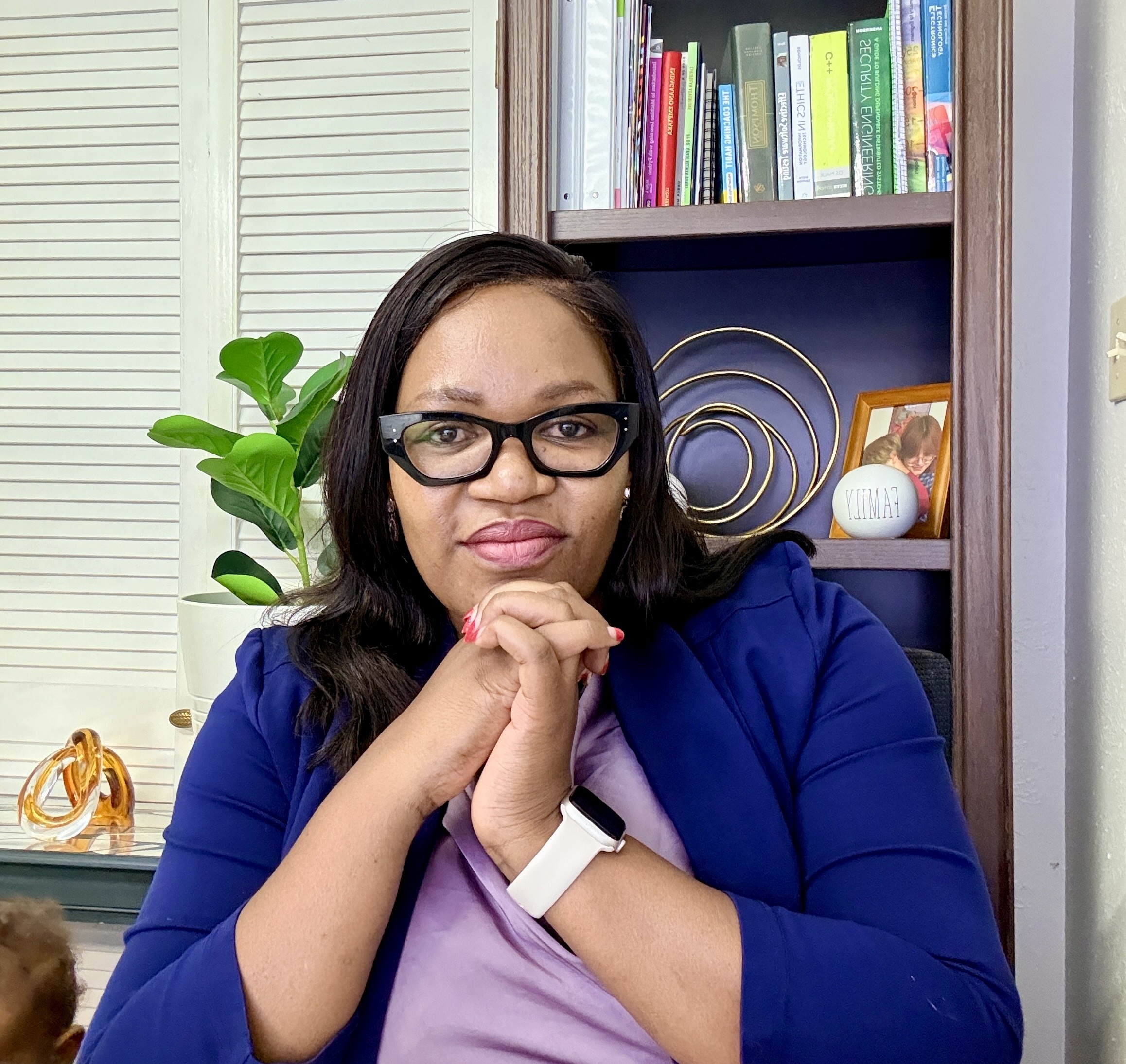
Joy N. Atkinson, Esq. is an attorney, mediator, and ADR coach, which means she has spent her career in the room after things went wrong: divorces, business partnerships that imploded, and family disputes. Over and over, she notes that almost none of it had to get that far. Through Let's Talk Mediation, she explores practical ways to understand conflict, navigate difficult conversations, and find constructive paths forward in our personal and professional lives. This is what she wishes she could have told those people five years earlier. Because the goal is not to eliminate every disagreement. It is to learn how to disagree better.
Keep talking, keep listening, and remember: every resolution starts with a conversation.
Learn more at www.atkinsonadvisory.com.

Comments
No comments yet. Be the first to share your thoughts.